What a real SaaS bill hides
The price on your SaaS invoice is the smallest number in the deal. The real cost of a per-seat tool also includes the seats nobody fully uses, the features locked behind higher tiers, the integration and admin time that never shows up on an invoice, and the 5 to 15% list-price rise most vendors apply every year. For a field-service team of around 30 people, a tool listed at roughly €14,000 a year is only the visible tip. Below we take a per-seat bill apart, layer by layer, then show what the same workflow costs to build once and own: about €2,500 a year on a flat fee, with payback in roughly a year.
The five hidden layers
A SaaS invoice shows one number. Here is what that number leaves out.
| Layer | What the invoice shows | What it actually costs you |
|---|---|---|
| Seats nobody uses | Billed per head, at full price | You pay for every licence, including the people who log in once a month. You are charged for headcount, not usage. |
| Features behind paywalls | “Included” | Reports, digital forms, integrations and API access sit in a higher tier. The workflow you actually need pushes you up the price ladder. |
| Integration and setup | €0 | Connecting the tool to your accounting, payroll or scheduling is your team’s time or a paid implementation, never the vendor’s. |
| Admin and internal time | €0 | Someone manages users, cleans data, chases support and handles renewals every single month. |
| Annual price rises | This year’s price | Most vendors raise list prices 5 to 15% a year. Multiplied by a growing headcount, the bill compounds quietly. |
Add these together and the total cost of ownership sits well above the sticker price. The invoice is the tip of the iceberg.
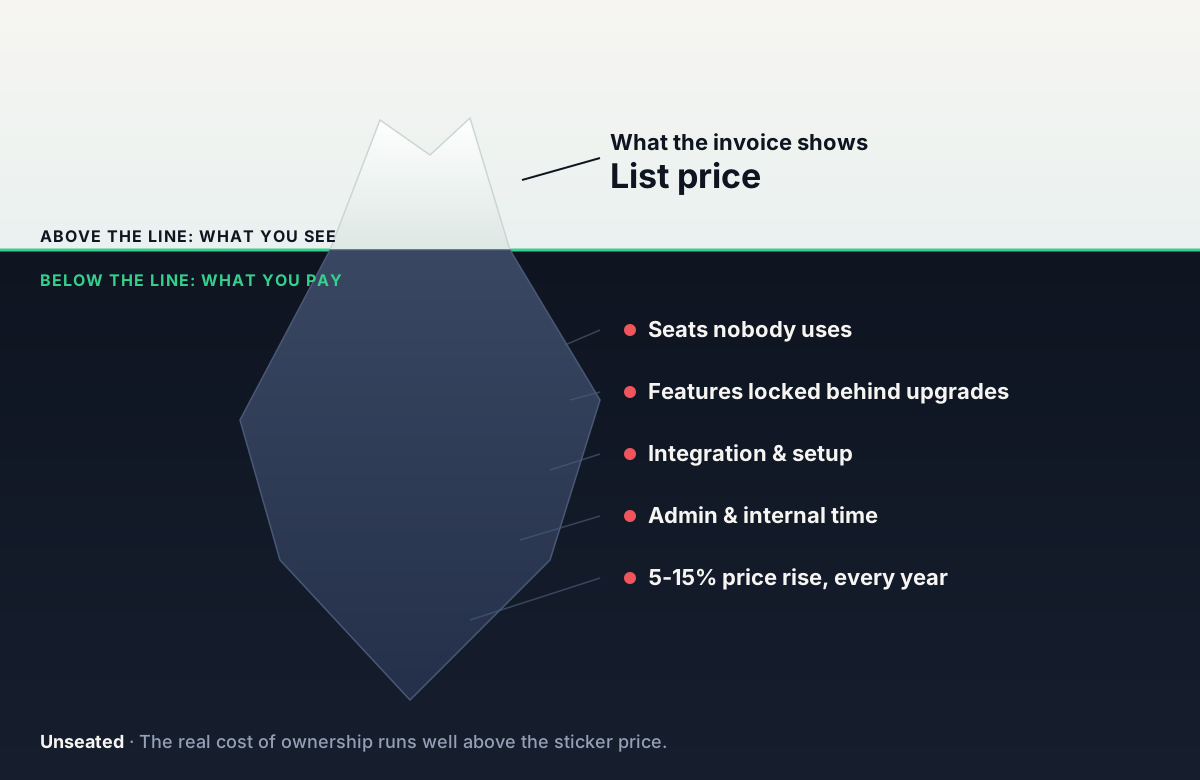
A real bill, taken apart
Take a field-service firm with about 30 engineers, on a typical work-management SaaS.
- On the invoice: around €14,000 a year for job scheduling, a mobile app, digital forms and invoicing.
- Layer on the hidden cost: unused seats for office staff who barely touch it, compliance forms and reporting that live in a higher tier, the integration into accounting, and the admin time to run it.
- Then add time: every new engineer is another seat, and every renewal adds 5 to 15%. In five years the same tool costs materially more than it does today.
- And you own nothing: stop paying and you lose access to your own job history and customer data.
What the same workflow costs to own
| Rent the SaaS (per-seat) | Your own system | |
|---|---|---|
| Cost model | Per-seat, rises every year, plus the hidden layers above | One-off build shared across ≈5 firms (about €8,400 each on a ∼€42,000 build) + flat ∼€2,500/year |
| Cost as you grow | Multiplies with every hire | Flat: add your whole team for free |
| Year 1 (30-seat field team) | ∼€14,000 plus hidden layers | ∼€12,100 (build share + running) |
| Ongoing | Rises every year | ∼€2,500/year flat |
| Payback | n/a, you are the payer | Roughly one year |
| Ownership | Stop paying, lose access | Your data, plus an escrow-backed perpetual licence, on your own isolated instance |
See your own number
The list price is the one number you already know. See the rest in two minutes: enter your seat count and current monthly price, and the calculator shows your five-year crossover. No sign-up.
Related questions
The quote covers licences at today's headcount. It excludes the seats you do not fully use, the features behind higher tiers, the integration and admin time your team spends, and next year's price rise. None of that appears on an invoice, but all of it is real money.
Sources
- Retool, 2026 Build vs. Buy Report (n=817): 35% have already replaced a SaaS with custom software, 78% plan more in 2026.
- Vendor list prices, July 2026 (per tool, see the SaaS Tax pages and catalog).
- SaaS list-price inflation of 5 to 15% per year since 2022 (as used across unseated.io).
- Rollout IT build and running-cost estimates.
- Forbes Technology Council, Josh Haas (co-founder, Bubble), 2026, cited with attribution.